
Web Design
The Art of visual appearance!
Crafting Effective Web Design!
The Importance of Web Design in the Digital Age
In today’s digital age, web design plays a crucial role in the success of businesses and organizations.
A well-designed website is not just about aesthetics;
it’s about creating a seamless user experience that guides visitors toward achieving their goals, whether it’s making a purchase, signing up for a service, or consuming content.
The layout, color scheme, typography, and navigation all contribute to how users perceive a website and, by extension, the brand behind it.
Good website design ensures that a site is not only visually appealing but also functional, accessible, and optimized for all devices.
This is particularly important as the number of mobile users continues to grow, necessitating responsive designs that adapt seamlessly to various screen sizes.

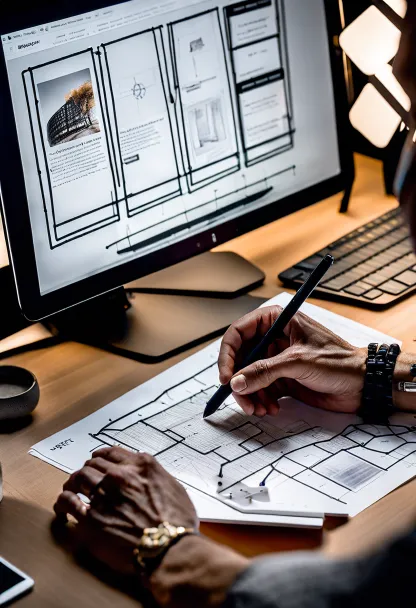
it's all about the user!
The Role of User Experience in Web Design
User experience (UX) is at the heart of effective web design.
It involves understanding the needs and behaviors of the target audience and creating an interface that is intuitive and easy to navigate.
A positive UX leads to higher user satisfaction, increased engagement, and ultimately, better conversion rates.
This involves more than just making a site look good;
it’s about ensuring that users can easily find the information they need, complete transactions smoothly, and interact with the site without frustration.
Elements such as fast loading times, clear call-to-action buttons, and logical content organization are all critical to a successful user experience.
A well-designed website not only attracts visitors but also encourages them to stay longer and return in the future.
to new heights?
and Unlock your path to success!

Good look performs better!
The Impact of SEO
on Web Design
Search Engine Optimization (SEO) is another critical aspect that intersects with your site design.
A beautifully designed website will not achieve its full potential if it is not visible to users searching for relevant content.
SEO-friendly website design involves optimizing the site’s structure, content, and code to ensure that search engines can easily crawl and index the site.
This includes using proper HTML tags, optimizing images, and ensuring that the site loads quickly.
Additionally, a well-organized site with a clear hierarchy and internal linking structure can help search engines understand the content and improve the site’s ranking on search engine results pages (SERPs).
In essence, good design supports SEO efforts by making it easier for search engines and users alike to navigate the site.
As technology continues to evolve, so too does website design.
Emerging trends like artificial intelligence (AI), voice search, and immersive experiences such as virtual reality (VR) are set to reshape the way websites are designed and used.
AI can personalize user experiences in real time, offering content and recommendations tailored to individual preferences.
Voice search is becoming increasingly popular, necessitating designs that accommodate voice commands and deliver information efficiently.
Meanwhile, VR and augmented reality (AR) are creating new possibilities for interactive and immersive web experiences.
Staying ahead of these trends is essential for businesses that want to remain competitive in the digital landscape.
Website design will continue to evolve, focusing on creating more engaging, personalized, and accessible experiences for users across all devices and platforms.
We Have Great Answers
Ask Us Everything about
Web Design
What is web design?
Web design is one the of a digital marketing services offered by a Digital Marketing agency as a stand-alone service or part of a web development.
It is the process of creating and arranging the visual and functional aspects of a website.
Why is website speed important for website design?
Website speed is crucial because it directly affects user experience, search engine rankings, and conversion rates.
A slow-loading website can lead to higher bounce rates, lower engagement, and poor search engine visibility, which ultimately impacts the site’s effectiveness.
What are the essential elements of a good website design?
Key elements of good website design include a clear and intuitive navigation structure, responsive design, fast loading times, high-quality content, strong visual hierarchy, consistent branding, and accessibility features for users with disabilities.
How does web design impact SEO?
Web design impacts SEO through factors like site structure, mobile-friendliness, loading speed, and the use of proper HTML tags (such as headings and alt text).
A well-designed site can improve search engine visibility by ensuring that search engines can easily crawl and index content.
What are web design best practices for mobile devices?
Best practices for mobile web design include using responsive design techniques, simplifying navigation, optimizing images for faster loading, ensuring buttons and links are easily tappable, minimizing text input, and testing across various mobile devices to ensure compatibility.
How do color choices affect web design?
Color choices affect web design by influencing user emotions, readability, and brand perception.
The right color scheme can enhance the user experience, create a visual hierarchy, and reinforce brand identity.
It’s important to use contrasting colors for text and background to ensure readability and to consider color psychology when selecting a palette.
What is responsive web design?
Responsive web design is an approach to web development that ensures a website looks and functions well on various devices and screen sizes.
This is achieved by using flexible layouts, images, and CSS media queries to adjust the website’s appearance based on the device’s screen size.
What is the role of typography in web design?
Typography plays a crucial role in web design by affecting readability, accessibility, and the overall aesthetic of the site.
Choosing the right fonts, sizes, line spacing, and color contrast ensures that content is easy to read and visually appealing.
Consistent typography also helps in establishing a brand identity.